


Speak: Language Learning
4.77.75K Reviews
App Specs
- Version
- 4.58.0
- Updated On
- License
- Free
- Downloads
- 10,000,000+
- Developer
- Speakeasy Labs
- Categories
- Education
- Platform
- Android, iOS
Screenshots

 Analysis by AppCompare
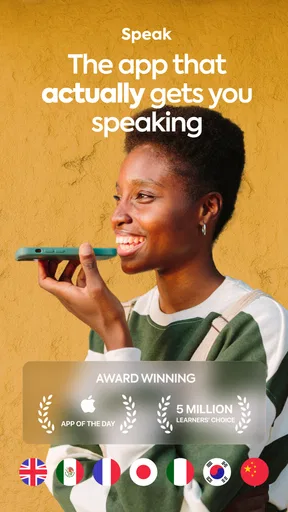
I judge a speaking-focused language app by a practical question: does it help me say something aloud when I need it, or does it mainly help me recognize words on a screen? Speak: Language Learning is built around speaking practice, so it makes the most sense for learners who want to get past the hesitation of forming sentences out loud. It is an education app from Speakeasy Labs, and its four-language focus—Spanish, French, English, and Japanese—gives it a clear lane rather than trying to cover every language.
That focus is useful, but it also shapes who should choose it. If your immediate goal is to rehearse everyday conversation, practice speaking without another person in the room, and build a habit through short sessions, this is the kind of approach I would consider. If you mainly want detailed grammar explanations, broad reference material, or a course in a language outside those four, a textbook, tutor, or another learning app may suit you better. I would think of speaking practice as one important part of learning, not a replacement for every other method.
First Impressions
From the get-go, Speak: Language Learning impresses with its clean and intuitive interface. You don’t need a manual to figure this one out. Just dive right in! The app offers a variety of languages to choose from, so whether you're tackling Spanish, French, or Japanese, you're covered. I must say, the initial setup was a breeze, allowing me to personalize my learning experience with a few taps.
What to Look For in a Speaking App
When I compare language-learning options, I separate three jobs that are easy to confuse: learning new words, understanding how a sentence works, and retrieving that sentence quickly enough to say it. A flashcard tool can be excellent for recall, while a grammar course can explain why a phrase is formed a certain way. A speaking-first app has a different test: does it give me repeated chances to produce language, notice where I stumble, and try again without turning practice into a stressful performance?
That distinction matters in real life. A learner preparing for a trip might already recognize restaurant vocabulary but still freeze when asked a simple question. Someone moving to an English-speaking environment may need to get comfortable answering ordinary questions rather than completing written exercises. For those situations, I value a low-pressure speaking routine more than a long list of isolated terms. I would still pair it with reading or listening practice, because being able to speak a rehearsed line and understanding an unexpected reply are separate skills.
Features That Stand Out
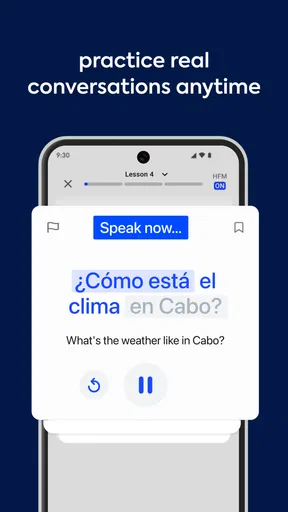
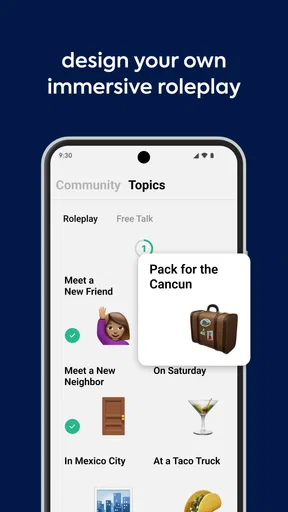
The app is packed with features that make learning not just effective but fun. One of my favorite aspects is the use of real-life conversations. Instead of rote memorization, you get to engage in dialogues that you might actually have when traveling. It felt like role-playing, and honestly, I found myself laughing at some of the scenarios.
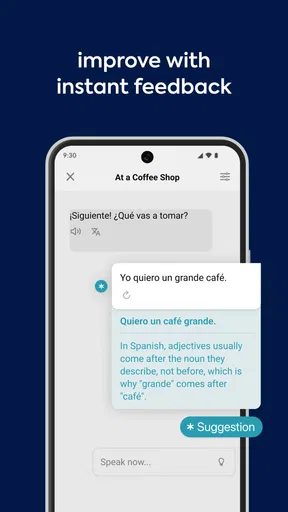
Speak: Language Learning also uses voice recognition technology to improve your pronunciation. I was a bit skeptical at first, but it works surprisingly well. After a few tries, I found myself getting better and feeling more confident. The app gives instant feedback, which is both encouraging and helpful.
Worth Reading Before You Choose

Flipboard Shows What News Apps Must Do Beyond the Feed

Switching to Android Auto Means Rethinking Your Driving Routine

Google Calendar Makes a Crowded Week Easier to Manage

Ludo King Makes the Most of the Minutes Between Plans

Baby Panda World Brings Quick Play to Modern Phones, but Its Game Library Feels Busy

ESPN’s Live Game View Makes Following Close Games Easier
Making Practice Fit an Ordinary Day
The strongest use case is not necessarily a long study session. I would use a short lesson during a quiet part of the day, then return to a useful dialogue when I have a moment to speak aloud. For example, before a trip, I might practice ordering food or asking for directions while getting ready in the morning. The point is not to memorize a script and hope the conversation follows it exactly; it is to become less awkward about producing familiar sentence patterns when the real exchange takes a small turn.
A practical tip is to say the answer at a natural pace rather than racing to finish the prompt. If recognition does not accept a response, I would first try speaking clearly and separating the words slightly, then repeat the phrase without over-enunciating. Speech recognition is a practice aid, not a perfect judge of communication: accents, microphone conditions, and small differences in pronunciation can affect what it catches. I would treat feedback as a cue to listen and try again, not as a final verdict on whether my speech is good.
Another useful workflow is to keep a small personal list outside the lesson of phrases that feel relevant to your life, such as introducing yourself or explaining what you need at work. After a session, try using the same sentence pattern with a different person, place, or object. That simple variation helps prevent practice from staying tied to one dialogue. It also exposes a limitation: rehearsing app prompts alone cannot fully prepare you for fast, unpredictable conversation with a native speaker.
A Learning Experience Tailored to You
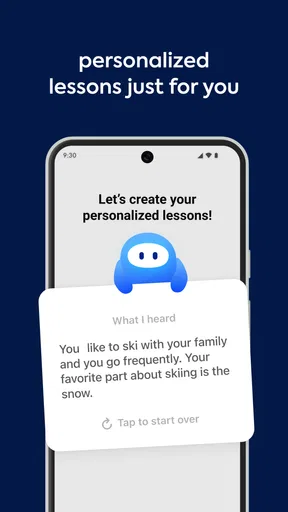
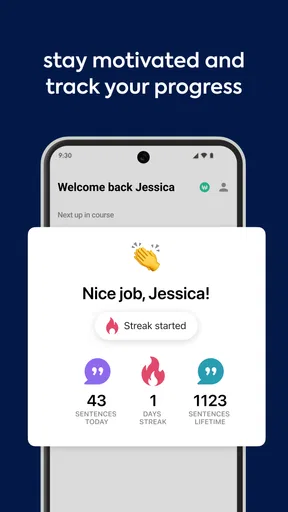
Another aspect worth mentioning is the customization options. You can set daily goals, track your progress, and even compete with friends if that’s your thing. The app learns from your performance and adapts the lessons to focus on areas where you need the most improvement.
Additionally, there are various levels of difficulty, so whether you're a complete beginner or looking to polish your skills, there’s something here for everyone. The bite-sized lessons make it easy to fit learning into even the busiest schedules.
Where Other Learning Styles May Fit Better
Compared with flashcard-based study, the speaking approach is more useful when the problem is retrieving a phrase aloud, but less suited to learners who want to review a large vocabulary list quickly or control exactly what they memorize. Compared with a traditional course or textbook, it can make practice feel more active, though a structured grammar resource may explain verb forms and sentence rules more thoroughly. And compared with a live tutor or language exchange, app practice is easier to do on your own schedule, while a real person can respond to unexpected wording, clarify meaning, and keep a conversation moving in ways a scripted exercise cannot.
I would not choose it as my only resource if I needed formal writing practice, exam preparation, or detailed feedback on extended conversation. Nor would I expect a handful of short sessions to make me fluent. The more realistic benefit is building a regular habit and making spoken practice less intimidating. For a beginner, that can be a valuable start; for an intermediate learner, it may work best as a focused supplement alongside conversation and listening practice.
Price, Commitment, and Switching
The app is free to download, with in-app purchases ranging from about fifteen dollars to three hundred and fifty dollars per item. I would check the purchase details in the app before committing, and decide whether I am using it often enough to justify paying for anything. The free starting point makes it easier to see whether speaking exercises suit my routine, but I would avoid treating a paid option as a shortcut to progress: steady practice matters more than the purchase itself.
Switching to a different study method is fairly straightforward if you keep your goal clear. If you move from speaking practice to a textbook, bring along the situations and sentence patterns you want to handle; if you add a tutor, use app practice to arrive with questions rather than expecting the app to replace conversation. The main cost of switching is not lost content so much as losing a routine. A small, repeatable schedule—one that leaves room for other forms of study—is easier to preserve than an ambitious plan that becomes a chore.
For a prospective learner, the main questions are practical: Can I use it as a beginner? The adjustable difficulty makes it a reasonable place to start, though I would supplement it when I need a slower explanation of grammar. Can it help with speaking confidence? Repeated out-loud attempts and immediate feedback can make speaking feel less unfamiliar, but real conversations remain important. Is it suitable for learning any language? Its focus is Spanish, French, English, and Japanese, so someone studying another language should look elsewhere. Can I use it in small gaps in my day? The short lessons are designed to fit brief sessions, but speaking aloud may not be convenient in a noisy or shared space.
A Few Final Thoughts
In conclusion, Speak: Language Learning brilliantly combines technology and pedagogy to create an engaging learning environment. It’s like having a mini language school on your phone. The app is perfect for anyone looking to pick up a new language or improve their current skills. With its user-friendly design and comprehensive features, it certainly stands out in the crowded field of language learning apps.
It is also a well-established choice in its niche: it has a 4.6 average from around 102,000 ratings and more than five million installs. It is free to start, rated for Everyone, and version 4.27.1 requires Android 8.0 or later. Those details make it accessible to many Android users, while the purchase range is worth keeping in mind if you decide to continue beyond the free experience. I see those figures as context, not proof that any one learner will find the teaching style right for them.
My recommendation is clear: try it if you want structured opportunities to speak Spanish, French, English, or Japanese and can make room for a little practice aloud. Use it to rehearse useful situations, repeat phrases at a comfortable pace, and build confidence; add a tutor, conversation partner, or grammar resource when your goals call for interaction or deeper explanation. If you prefer silent study, need another language, or want a complete course in writing and grammar, choose a different tool instead. So, if you're ready to embark on a language journey, why not give it a try? Who knows, you might just find yourself speaking fluently sooner than you think!
Pros
- Intuitive interface simplifies learning.
- Offers a wide range of languages.
- Interactive exercises keep users engaged.
- Offline mode for learning on the go.
- Progress tracking helps measure improvement.
Cons
- Limited free content available.
- Some features require in-app purchases.
- Voice recognition can be inconsistent.
- Limited support for less common languages.
- Occasional app crashes reported.
FAQs for Speak: Language Learning
What languages can I learn with Speak: Language Learning?
Speak: Language Learning offers a wide range of languages, including popular ones like Spanish, French, German, and Mandarin, as well as less common languages such as Swahili and Icelandic. The app is regularly updated to include more languages, catering to diverse user interests and learning needs.
How does Speak: Language Learning teach new languages?
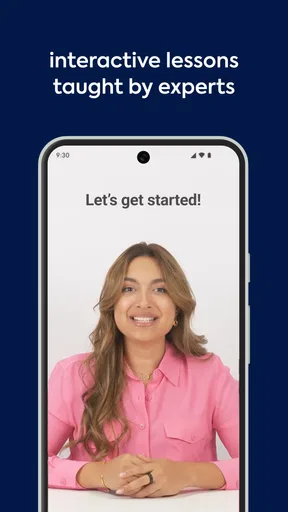
The app uses a combination of interactive lessons, real-world conversations, and speech recognition technology to help users learn efficiently. The lessons are designed to be engaging and practical, focusing on vocabulary, grammar, and pronunciation to ensure comprehensive language acquisition.
Is Speak: Language Learning suitable for beginners?
Yes, it's perfect for beginners as well as intermediate and advanced learners. The app starts with basic vocabulary and phrases, gradually progressing to more complex topics. Users can customize their learning path based on their skill level, ensuring a tailored and effective learning experience.
Does the app require an internet connection?
While an internet connection is needed for initial downloads and updates, Speak: Language Learning offers offline access for most of its content. This allows users to continue learning on the go without worrying about connectivity, making it convenient for traveling or areas with limited internet access.
Are there any subscription fees for Speak: Language Learning?
Speak: Language Learning offers a free version with limited features, but to unlock the full range of content, users can subscribe to a premium plan. The subscription provides access to advanced lessons, additional languages, and personalized learning features, enhancing the overall learning experience.


